
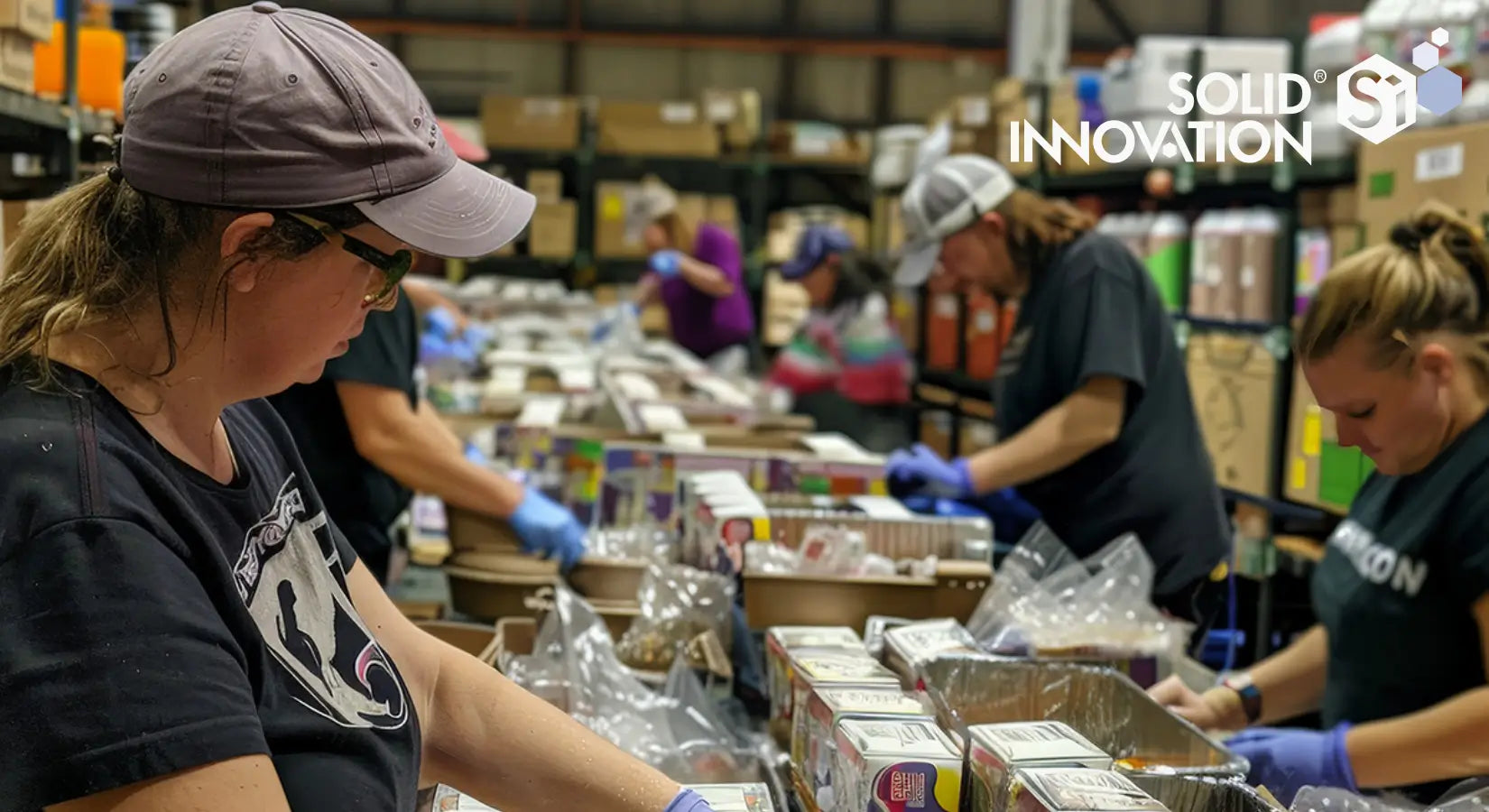
The process of handling wholesale inventory in the food and beverage (F&B) sector has never been more complicated or more important. Fast-moving products, low margins, high safety requirements, and more demanding customers cannot allow distributors to take chances with their inventories or distribution channels. Profit and loss are frequently determined by a wholesaler's effectiveness in managing, forecasting, and moving inventory across multiple sites and channels.
As experienced professionals in route accounting and direct-store-delivery (DSD) operations, we have observed the impact that proper systems and workflows can have on a distributor's efficiency.
Why Inventory Management Matters More in F&B Than in Any Other Sector
Unlike goods of long-lasting nature, foods and beverages have expiration dates, storage needs, seasonal changes and uncertain consumption patterns. Even a minor slip-up, such as excessive ordering of perishable goods or stocking of SKUs with high demand, can trickle down the business:
-
Spoilage leads to direct financial loss.
-
Stockouts impact customer satisfaction and future orders.
-
Inefficient routes delay deliveries and hurt relationships.
-
Regulatory non-compliance risks fines and recalls.
Good inventory management is not merely operational; it is strategic. It affects forecasting accuracy, purchase decisions, vendor relationships, and the overall stability of the business.
Core Challenges Facing F&B Wholesale Distributors
1. Managing Perishable and Temperature-Sensitive Goods
Products such as dairy, meat, beverages, and baked goods cannot be tracked with generic stock-tracking systems; they require real-time visibility. Wholesalers must know exactly:
-
What's expiring soon?
-
What needs discounting?
-
What must be prioritized on the upcoming orders?
This proactive approach reduces shrinkage and supports better decision-making.
2. Demand Volatility
Demand will spike or decline unpredictably due to seasonality, promotions, weather, cultural events and so on. Wholesalers can easily order either too much or too little without the correct historical data and predictive tools, which is detrimental to their profit and reliability.
3. Complex Route Delivery Operations
Many F&B wholesalers rely on DSD models, which involve:
-
Managing multiple sales routes
-
Updating inventory on the truck
-
Capturing real-time invoicing
-
Ensuring drivers always have the correct quantities on hand
Manual or outdated systems often cause mismatches between expected and actual stock levels.
4. Fragmented Data Across Systems
Some distributors continue to use different tools for accounting, route management, invoicing, and warehouse management. Systems that do not communicate with each other cause errors, and staff members spend hours performing manual information reconciliation.
Key Strategies for Optimizing Wholesale Inventory Management
1. Implement Real-Time Inventory Tracking
Real-time visibility allows wholesalers to:
-
Track stock across multiple warehouses.
-
See live truck inventory.
-
Reduce discrepancies in counts.
-
Adapt to demand changes instantly.
It eliminates guesswork and empowers teams with accurate, actionable data.
2. Improve Forecasting With Historical and Seasonal Data
A robust forecasting engine helps wholesalers plan smarter:
-
Analyze trends across months or years.
-
Identify top sellers.
-
Avoid over-ordering slow-moving products.
-
Prepare for seasonal shifts.
Accurate forecasting stabilizes cash flow and sharpens purchasing decisions.
3. Streamline Warehouse Operations
The most efficient wholesalers leverage:
-
Barcode scanning
-
Automated replenishment rules
-
Lot and batch tracking
-
FIFO/FEFO methodologies
When combined, these practices dramatically reduce spoilage and handling errors.
4. Integrate Route Accounting and DSD Tools
For distributors using route-based delivery, a unified route accounting system offers:
-
Automatic inventory deduction per sale
-
Real-time price updates
-
Mobile invoicing for drivers
-
Faster reconciliation at day's end
It simplifies workflows and strengthens relationships with retail partners.
5. Strengthen Traceability and Compliance
Regulatory expectations continue to grow. Wholesalers should ensure:
-
Full traceability from supplier to customer
-
Accurate logging of lot numbers and expiration dates
-
Quick recall processes
-
Temperature and handling compliance
Digital record-keeping is no longer optional; it's essential for safety and accountability.
Where Technology Makes the Biggest Impact
The modern F&B supply chain is moving too quickly to be managed with manual spreadsheets or outdated systems. The most competitive wholesalers today rely on integrated, full-featured, centralized software that spans from warehouse inventory to route performance.
Solutions like Solid Innovation®'s Solid Route Accounting™ platform help wholesalers:
-
Maintain real-time inventory accuracy.
With each mobile device accurately tracking its inventory, returning items to return warehouses, and synchronizing this data with the ERP system, multi-warehouse inventory control becomes easy. -
Manage DSD and route operations with precision.
Specialized reports, such as the Stop Analysis Report and Trip Report, give managers a bird's-eye view of route salespeople's work. -
Predict demand through data intelligence.
Customer Route Sheets with Sales History, with optional seasonal adjustments, allow route sales staff to receive summarized historical sales data. -
Automate invoicing and reconciliation to reduce administrative time.
The direct, seamless data synchronization with the ERP system, along with straightforward cash-out procedures, makes administrative tasks easier.
When you integrate your systems, your business is more efficient, responsive and profitable.
Frequently Asked Questions
1. What is the most extensive inventory loss in the food and beverage industry?
The most significant sources of loss are spoilage and expiration. Perishable goods may not be sold quickly enough unless they are tracked in real time and managed with an appropriate rotation policy (such as FIFO/FEFO).
2. What is the benefit of real-time inventory tracking to the wholesalers?
It offers real-time access to warehouse, truck, and in-store inventory, allowing distributors to make quicker decisions, minimize shrinkage, and fulfill orders more effectively.
3. What is the importance of DSD software to food and beverage distributors?
DSD software automates route management, mobile invoicing, inventory deduction, and driver accountability, making routes more efficient and reducing the administrative workload.
4. What are the characteristics of an inventory system that F&B wholesalers seek?
The main characteristics are lot tracking, forecasting solutions, support for mobile routes, warehouse automation, system integrations, and real-time dashboards.
5. What can wholesalers do to lower stockouts?
With proper forecasting, automated reorder points, and harmonized inventory information, distributors can anticipate demand and restock products before shortages occur.
How Solid Innovation® Helps
Solid Innovation® specializes in route accounting and wholesale inventory management explicitly built for food and beverage distributors. Having decades of experience in the industry, our platform can help companies to optimize their operations, remove manual mistakes and get a complete view of their inventory, including the warehouse, all the way to the delivery truck.
Our team is ready to help modernize your F&B wholesale business, boost profitability, and gain control over your inventory.
Test our solutions at Solid Innovation® and learn how your distribution process can run smoothly with the right tools.