

Curious how your local store consistently stocks fresh products and never runs low, no matter how high demand is? The secret behind this consistent supply isn't mystical – it's all thanks to Direct Store Delivery (DSD).
This innovative method keeps your favorite products available and in prime condition. Let's explore how DSD transforms the shopping experience, keeping shelves well-stocked and items at their best.
In fact, studies show that direct store delivery can enhance shelf availability by up to 8%. But how exactly does DSD achieve this remarkable feat? Let's find out!
In this guide, we will discuss:
-
Basic Concept and Pros and Cons of DSD
-
Direct Store Delivery vs. Centralized Distribution Model: A Comparison
-
Ideal Candidates for Direct Store Delivery (DSD)
-
The Direct Store Delivery (DSD) Process
-
Best Practices for Leveraging the Direct Store Delivery Model
-
Industry-Specific Applications of DSD
-
Top Software for Implementing the DSD Model
-
Emerging Trends in Direct Store Delivery
-
A Real-Life Success Story of DSD Implementation
P.S. Are you facing challenges in keeping your products stocked and ready for your customers? Solid Innovation® – the leading route accounting and B2B order-taking software – can simplify your process. By automating mobile sales and inventory management and integrating with key ERP systems, we empower businesses to excel in DSD. Benefit from the 35-Day Trial Offer Today!
What is Direct Store Delivery?
Direct Store Delivery (DSD) is a logistics strategy in which manufacturers or suppliers bypass traditional warehouses and deliver products straight to retail stores. This approach streamlines the supply chain, ensuring items reach stores faster and more efficiently, improving freshness, and reducing transit time.
Direct Store Delivery VS. Centralized Distribution Model
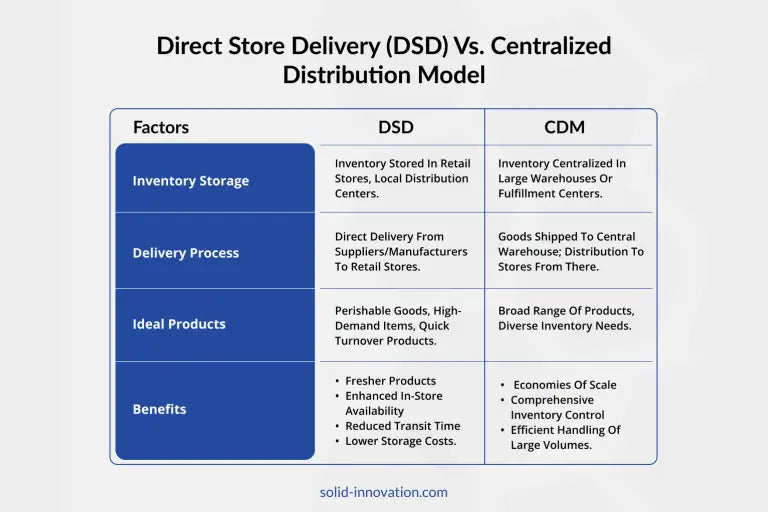
When we examine Direct Store Delivery (DSD) and Centralized Distribution, we compare two different routes to the same destination. Each path has its own advantages and considerations.
Direct Store Delivery: The Direct Route
-
Decentralized Distribution: Acts as a decentralized retailer's distribution center, bypassing the need for a central warehouse.
-
Retail Stores Inventory: Facilitates direct-to-store delivery from suppliers, manufacturers, or distribution centers, with each retail store holding a part of the inventory.
-
Streamlines Perishable Goods: This is especially beneficial for perishable goods and high-demand items, like produce, dairy products, seasonal items, or medication, by reducing transit time and ensuring optimal freshness.
-
Optimal Use: Ideal for products that need quick turnover and businesses focused on improved in-store availability, along with lower labor and storage costs.
Centralized Distribution Model: The Hub of Operations
-
Inventory Storage: Stores all inventory in one or more large warehouses or fulfillment centers that act as the central hub.
-
Supplier to Warehouse: Suppliers send goods to these central locations, where they're stored for DTC orders, safety stock, or restocking retail locations.
-
Inventory Management Core: This serves as the nerve center for inventory management, order fulfillment, and shipping, catering to multiple retail stores and sales channels.
-
Ideal For Extensive Ranges: Best suited for retailers with broad product ranges and those selling across various platforms.
Who Benefits From Direct Store Delivery (DSD)?

Direct store delivery is not just a distribution method; it's a game-changer for sectors where freshness and rapid turnover are paramount.
Here's a closer look at who stands to gain:
-
Fresh Produce Suppliers:
-
Utilization: To transport produce directly from farms to retail stores.
-
Key Benefit: Ensuring produce like fruits and vegetables arrive fresh and full of flavor.
-
Impact: Crucial for maintaining visual appeal and nutritional value.
-
-
Bakeries:
-
Application: Freshly baked goods are delivered early in the morning directly to stores.
-
Advantage: Delivering bread, pastries, and other baked goods at their peak of freshness.
-
Result: Preserves the aroma and taste of freshly baked goods.
-
-
Beverage Providers:
-
Usage: Transport craft beers and artisanal drinks quickly to retail outlets, often chilled.
-
Necessity: Maintaining optimal quality with special handling or refrigeration.
-
Gain: Ensures a competitive edge in a market sensitive to product freshness.
-
-
Floral Distributors:
-
Method: Transport flowers in temperature-controlled vehicles directly to stores.
-
Importance: The freshness and visual appeal of flowers.
-
Method: Transporting flowers directly to retail points to reduce transit time and prolong shelf life and visual appeal.
-
-
Dairy Distributors:
-
Strategy: Quick, direct deliveries from dairy farms or processing centers to retail points.
-
Challenge: Managing products like milk, cheese, and yogurt.
-
Strategy: Using DSD to minimize transit time, extend shelf life, and ensure vibrant, fresh products.
-
Benefits & Challenges of Direct Store Delivery

The Direct Store Delivery model is known for enhancing retail operations. It offers several benefits, including a streamlined supply chain and increased sales. While DSD offers numerous benefits, it also presents challenges that require careful consideration.
Benefits of Direct Store Delivery
-
Enhanced Product Freshness
-
Direct Transit: From production to retail shelves, ensuring high consumer satisfaction.
-
Reduced Spoilage: Especially crucial for perishables like food and beverages.
-
-
Reduced Inventory Costs
-
Lower On-Site Inventory Levels: Thanks to frequent direct replenishments.
-
Cost Savings: Minimized warehousing fees and obsolescence risks.
-
-
Improved Supply Chain Efficiency
-
Streamlined Logistics: Fewer intermediary steps and storage points.
-
Reduced Transit Times: Minimizing errors and delays.
-
-
Increased Sales Opportunities
-
Consistent Availability: Prevents stockouts of high-demand items.
-
Customer Loyalty: Drives higher sales volumes.
-
-
Stronger Retailer-Manufacturer Relationships
-
Direct Interaction: Fosters closer partnerships and tailored promotions.
-
Direct Store Delivery Challenges
-
Higher Operational Costs
-
Increased Expenses: More frequent deliveries and specialized logistics.
-
Offset by Revenue: Increased sales can often offset these costs.
-
-
Complex Logistics Management
-
Advanced Planning Needed: Requires sophisticated route optimization and scheduling.
-
-
Limited Scale for Small Retailers
-
Challenges for Smaller Operations: Attracting suppliers for lower volume orders.
-
-
Dependency on Suppliers
-
Vulnerability to Supplier Issues: Stockouts can impact customer satisfaction.
-
-
Increased Store Traffic and Storage Issues
-
Logistical Challenges: Managing frequent deliveries and limited storage space.
-
In summary, while DSD streamlines the path from manufacturer to retail, offering efficiency and freshness, it's essential to navigate its complexities and scale-related challenges. Careful planning and management can leverage its strengths while mitigating its drawbacks.
What's the Process for Direct Store Delivery (DSD)?
The Direct Store Delivery process is a well-oiled machine designed to move products from A to B quickly and efficiently.
Step-by-Step Breakdown of DSD
-
Order Placement: The Starting Line
-
Electronic Order Submission: Initiation via DSD software for real-time coordination.
-
Order Confirmation: Meticulous verification to prevent delivery or inventory errors.
-
-
Product Preparation: Synchronized Orchestra
-
Supplier Readiness: Packaging and logistics coordination for dispatch.
-
Strategic Route Planning: Considering traffic, delivery windows, and retail hours.
-
-
Delivery Route Planning: Mapping the Journey
-
Route Optimization: Dynamic system for cost and time efficiency.
-
Flexibility in Routes: Adaptability for last-minute changes or challenges.
-
-
Delivery to Stores: The Delivery Dance
-
Efficient Route Execution: Focused on timely delivery and cost reduction.
-
In-Store Support: Additional merchandising assistance upon arrival.
-
-
Merchandising and Display: The Art of Attraction
-
Collaborative Display Setup: Engaging with retail staff for strategic presentation.
-
Ongoing Display Maintenance: Ensuring continual freshness and appeal.
-
-
Inventory Management: The Balancing Act
-
Collaborative Inventory Control: Working with store staff to maintain optimal stock levels.
-
Monitoring Sales and Stock: Tracking patterns to anticipate demand.
-
-
Payment and Invoicing: Sealing the Deal
-
Transaction Finalization: Electronic invoicing for efficient billing.
-
Streamlined Electronic Payments: Ensuring smooth cash flow among parties.
-

How Does Direct Store Delivery Work in Different Industries?
Direct Store Delivery meets the unique requirements and challenges of various industries, ensuring products reach their destinations in optimal condition and align with dynamic market demands.
1. Food and Beverage Industry
Let's explore how DSD brings unparalleled freshness and adaptability to the food and beverage industry.
-
Peak Freshness Guarantee: DSD ensures perishables like fruits, vegetables, and dairy products reach stores at peak freshness, maximizing shelf life for consumers.
-
Adaptable to Seasonal Demands: DSD's flexibility allows quick adjustments to product delivery to meet seasonal peaks, ensuring items like cold drinks in summer or holiday-specific foods are readily available as consumer demand rises.
-
Direct Brand Interaction: Suppliers can directly influence how stores display and promote their products, boosting brand visibility and consumer engagement.
2. Pharmaceuticals
Next, let's examine DSD's critical role in the pharmaceutical industry, where safety and timeliness are essential.
-
Regulated Handling and Delivery: Pharmaceuticals demand stringent control over transportation conditions; DSD ensures that medicines, vaccines, and other health products are handled according to health and safety standards.
-
Timely Delivery of Critical Medications: DSD facilitates the rapid restocking of essential medications, ensuring pharmacies and healthcare providers have consistent access to necessary drugs.
-
Enhanced Traceability: With DSD, pharmaceutical companies can better track their products' journey from production to pharmacy, crucial for recalls or tracking batch efficacy.
3. Specialty Products
Now, let's see how DSD meets the unique demands of specialty products with customized solutions.
-
Customized Logistics Solutions: High-value or niche products benefit from DSD's specialized handling and delivery services, ensuring delicate items like electronics or luxury goods arrive in pristine condition.
-
Brand Experience Control: Specialty product suppliers can directly manage how their items are presented in retail environments, ensuring a consistent, impactful brand experience.
-
Rapid Market Response: DSD allows specialty product suppliers to respond quickly to market trends and consumer preferences, introducing new products directly to stores without delay.
4. Consumer Packaged Goods (CPG)
Finally, let's examine the efficiency and dynamic management DSD brings to consumer packaged goods.
-
Streamlined Distribution for Everyday Items: DSD simplifies the logistics of delivering household staples, ensuring that products like toiletries, cleaning supplies, and packaged snacks are always available on store shelves.
-
Dynamic Inventory Management: The DSD model lets CPG companies adjust inventory based on real-time sales data, ensuring optimal stock levels and reducing waste.
8 Best Practices to Leverage Direct Store Delivery Model
Implementing best practices in Direct Store Delivery can significantly enhance operational efficiency, customer satisfaction, and profitability. Here are the top eight strategies:
1. Harness Cutting-Edge Tech
-
Go Beyond with DSD Software: Maximize efficiency in inventory management and route optimization through top-tier DSD tech.
-
Mobile Solutions at Your Fingertips: Use mobile apps for real-time data and flawless driver-dispatch communication.
2. Route Optimization Mastery
-
Data-Driven Route Planning: Analyze past delivery data for the most efficient paths.
-
Variable Mastery: Factor in traffic, delivery windows, and store locations for time and fuel savings.
3. Inventory Management Excellence
-
Precision in Stock Levels: Maintain the right inventory to avoid over- and understocking.
-
Smart Forecasting: Use forecasting tools to predict demand, optimize stock, and reduce waste.
4. Strengthen Retailer Relationships
-
Open Communication Channels: Regular, insightful interactions with store managers.
-
Tailored Delivery: Customize deliveries to each store's needs to boost satisfaction.
5. Compliance and Quality Assurance
-
Regulation Adherence: Stay on top of transportation and safety regulations.
-
Top-Notch Quality Controls: Ensure deliveries meet the highest quality standards.
6. Empower Your Team
-
In-depth Training Programs: Cover all bases – from product handling to tech use.
-
Cultivate Learning Culture: Encourage ongoing feedback and learning for team growth.
7. Data-Driven Insights
-
Performance Analysis: Regularly evaluate delivery and customer feedback.
-
Insightful Decision-Making: Let data insights shape your DSD strategy.
8. Embrace Sustainability
-
Sustainable Practices: Opt for fuel-efficient vehicles and reduce packaging waste.
-
Innovative Green Solutions: Explore renewable energy and sustainable materials.
Elevate your distribution strategy with Solid Route Accounting™'s DSD Software! Experience unparalleled efficiency in inventory management, seamless integration with major ERP systems, and real-time data access for smarter decision-making.

Embrace the future of Direct Store Delivery (DSD) and transform your business operations. Don't wait – discover how Solid Route Accounting™ can revolutionize your distribution process today!
Emerging Trends in Direct Store Delivery
Direct Store Delivery trends are rapidly evolving and driven by technological advancements and innovative practices. Here's a look at the key trends reshaping DSD:
-
Enhanced Connectivity: The gap between major retailers and suppliers is narrowing thanks to technology that facilitates seamless communication of pickup and delivery activities. Delivery teams equipped with connected mobile devices can access and share critical information like route plans and inventory levels in real time, fostering a more synchronized operation.
-
Real-Time Data Access: Integrating mobile technologies lets merchants and suppliers monitor DSD operations as they happen. This instant access to data ensures route plans and inventory management can be adjusted quickly, improving delivery efficiency.
-
Streamlined Documentation: Adopting mobile printers and Electronic Data Interchange (EDI) systems is revolutionizing delivery documentation. These technologies enable instant creation and sharing of invoices and delivery receipts, ensuring accurate, timely record-keeping.
-
Predictive Analytics and AI: Shaping the Future: Predictive analytics and artificial intelligence (AI) in DSD are set to redefine the efficiency and effectiveness of delivery operations. By analyzing historical data and current trends, AI algorithms can predict demand more accurately, optimize delivery routes, and even forecast potential disruptions.
Pro Tip: Implementing an AI-powered analytics tool can enhance your DSD strategy. According to a McKinsey study, businesses that use AI in their supply chains have seen a 15% increase in efficiency.
Top 3 Direct Store Delivery (DSD) Software
1. Solid Innovation®

Solid Innovation® specializes in a robust Solid Route Accounting™ system, reflecting its commitment to revolutionizing the DSD process for distributors of all sizes.
Our solution is tailored to meet the complex demands of direct store delivery. It integrates seamlessly with major ERP systems and offers a comprehensive suite of tools for mobile sales, inventory management, and route optimization.
-
ERP System Integration: It integrates seamlessly with major ERP systems like QuickBooks, Sage 100, and SYSPRO, ensuring a unified, efficient operational flow.
-
Flexible Order Entry: The Solid Order Entry™ app allows retail locations to place orders online, with orders entered directly into the ERP system. This flexibility caters to different operational styles.

-
Efficient Distribution and Sales Process: Distributors can pick and load products from their warehouses, deliver them directly to retail locations, and manage transactions like sales, returns, and payments on the spot.
-
Real-Time Inventory and Transaction Tracking: It offers real-time tracking of inventory, sales, and transaction creation, along with overall trip analytics, providing up-to-date information and enhancing decision-making.
-
Central Management Console: This feature enables easy configuration and access to various sales reports, providing a centralized solution for customer management, order entry, invoicing, and inventory control.

-
Comprehensive Support and Guidance: Solid Know-How™ offers extensive guidance on all aspects of the system, including advanced topics, ensuring users can fully utilize its capabilities.
-
Security and Reliability: Hosted on a leading cloud computing platform, it ensures data security and system reliability, essential for trustworthy operations.
-
Customization and Configuration Options: The system offers a wide range of configurable options to support different business styles and needs, making it adaptable to distributors of all sizes.

-
Enhanced Customer and Sales Management: Features such as price levels, discounts, and customer-specific pricing ensure accurate, tailored transactions, improving customer satisfaction and management efficiency.
Solid Route Accounting™ is the ultimate tool to revolutionize your distribution process. Take the first step towards transforming your business operations – find out more about Solid Route Accounting™!
2. LaceUp

LaceUp's DSD route accounting software streamlines invoicing, reduces inefficiencies, and boosts sales and profit margins for distribution companies.
This platform is celebrated for its intuitive design, which simplifies operations for drivers and sales reps and ensures every delivery and transaction adds value to the business.
Features:
-
Innovative Invoice Creation: Utilizes an image-rich catalogue and barcode scanning for quick invoice generation.
-
Dynamic Credit Management: Differentiates between good and bad credits, with detailed tracking for accurate inventory and tax reporting.
-
Real-time Truck Inventory: Tracks inventory from start to end of day, ensuring accuracy between the truck and warehouse.
-
Lot Traceability: Enhances consumer safety by tracking products from the warehouse to the point of sale, which is crucial for recalls and audits.
3. Spring Global

Spring Global specializes in delivering an advanced, enterprise-grade SaaS solution for Consumer Packaged Goods (CPG) companies.
At the core of their offering is a powerful suite of tools that control Artificial Intelligence (AI) to provide actionable insights and automate critical processes, such as store audits, through their innovative Command Center.
Features:
-
AI for Actionable Insights: Uses AI to analyze data and deliver actionable insights, helping companies make informed decisions quickly.
-
Image Recognition for Store Audits: Automates store audits, significantly reducing time and effort while increasing accuracy and clarity for team members.
-
360° Customer View: Gives all users comprehensive access to customer data, ensuring exceptional customer service and streamlined team interactions.
-
Scalable to Global Operations: Proven capability to scale solutions for CPG companies worldwide, accommodating thousands of users while maintaining customizability and supporting multiple languages and currencies.
Examples of Successful Direct Store Delivery Implementations
1. Starbucks' Distribution of Fresh Food

Starbucks, a global leader in coffee, has effectively used Direct Store Delivery (DSD) to distribute fresh food items. This strategic approach ensures its retail outlets consistently offer fresh, quality food options to complement its coffee range, meeting modern consumers' need for convenience and quality.
Benefits of using DSD:
-
Rapid Response to Market Needs: Starbucks can quickly adapt to changing consumer preferences, ensuring its offerings are always relevant.
-
Personalized Product Assortment: Each store can tailor its fresh food inventory based on local tastes and demand, making offerings more appealing.
-
Enhanced Customer Experience: Fresh, high-quality food enhances the overall Starbucks experience and encourages repeat visits.
-
Operational Excellence: DSD reduces supply-chain complexity, leading to cost savings and smoother operations.
Outcomes:
-
Improved Quality Control: By utilizing DSD, Starbucks maintains control over the freshness and quality of its food products throughout the supply chain. This ensures that customers receive consistently high-quality offerings at every Starbucks location.
-
Enhanced Convenience: DSD allows Starbucks to streamline its supply chain and ensure timely delivery of fresh food items to each store. This improves convenience for customers seeking a quick meal or snack with their coffee, contributing to higher sales and customer satisfaction.
-
Optimized Inventory Management: Implementing DSD enables Starbucks to optimize inventory management by delivering the right quantity of fresh food items to each store based on demand patterns and sales forecasts. This minimizes waste and improves overall operational efficiency.
2. PepsiCo's Efficient Beverage Distribution

PepsiCo, a global leader in beverages and snacks, has effectively used direct store delivery (DSD) for its extensive beverage portfolio. This approach is pivotal in distributing its beverages to a wide array of retail outlets, ensuring products are delivered efficiently and remain available to meet consumer demand.
Benefits of Using DSD:
-
Rapid Market Adaptation: PepsiCo stays ahead of the curve, adapting swiftly to consumer trends and preferences.
-
Customized Product Selection: Retail outlets can stock products that align with local demand, making offerings more relevant.
-
Reduced Operational Complexities: DSD simplifies distribution, reducing costs and improving operational efficiency.
-
Significant Revenue Contribution: PepsiCo Foods North America (PFNA) demonstrates DSD's success, with over 95% of its $19.6 billion annual revenue attributed to this approach, underscoring its pivotal role in PepsiCo's business model.
Outcomes:
-
Enhanced Retail Presence: PepsiCo's use of DSD ensures a constant and visible presence in retail locations. By directly managing delivery and stocking, PepsiCo can ensure its beverages are prominently displayed and available, boosting brand visibility and purchase likelihood.
-
Increased Efficiency and Responsiveness: The DSD model lets PepsiCo respond quickly to changes in market demand and consumer preferences. This distribution agility supports new product introductions and promotional strategies, helping PepsiCo capitalize on market trends and seasonal opportunities.
-
Improved Inventory Management: PepsiCo's DSD system enables more accurate inventory control and management at the retail level. By closely monitoring sales data and inventory levels, PepsiCo can adjust deliveries to match consumption patterns, reducing stockouts and minimizing surplus inventory, thereby optimizing supply chain efficiency.
Adding a notable feather to its cap, PepsiCo Foods North America (PFNA) underscores the DSD model's success. This strategy generates over 95% of its $19.6 billion annual revenue, highlighting DSD's crucial role in PepsiCo's business approach.
3. Amazon's Fresh Grocery Delivery

Amazon, a titan in e-commerce, has masterfully leveraged Direct Store Delivery (DSD) for its fresh grocery segment, Amazon Fresh. This innovative approach enables Amazon to deliver a wide range of perishable items directly to customers' doorsteps with remarkable speed and efficiency, redefining the grocery shopping experience in the digital age.
Outcomes:
-
Revolutionized Grocery Shopping: Amazon's use of DSD for fresh groceries has transformed the grocery shopping experience, allowing customers to receive fresh produce, dairy, and other perishables without leaving their homes. This convenience has raised consumer expectations in the grocery industry.
-
Unmatched Freshness and Quality: With DSD, Amazon ensures that the groceries delivered are of the highest quality and freshness. The streamlined supply chain reduces the time from farm to table, ensuring that customers enjoy the best possible products.
-
Dynamic Inventory Adaptation: Amazon's DSD model enables real-time inventory adjustments based on current demand, reducing waste and ensuring popular items stay in stock. This responsiveness improves customer satisfaction and enhances operational efficiency.
Want Convenient Direct Store Delivery? Solid Innovation® at Your Service
Many businesses face distribution challenges and want a solution quickly to prevent losses. We covered how streamlined logistics can support retail operations and how DSD can transform how you run your business.
Key Takeaways
-
DSD reduces inventory mismatches for better stock management.
-
Direct communication via DSD enhances retailer-manufacturer relationships.
-
Adopt tech solutions to boost DSD efficiency.
-
Adapt promotions to local market preferences.
-
Revisit logistics to cut costs and improve efficiency.
Without a proper distribution and logistics system, you can't expect your business to be highly successful and gain a competitive advantage. So, using the Solid Innovation® one-stop route accounting software can significantly enhance your operations.
With clear reports for every stop and trip, faster deal closure, and improved customer satisfaction, it helps you drive more sales and revenue while keeping customers happier.
Get Full Access to the Solid Route Accounting™ System for 35 Days!